big time asset tracking for not so big companies
Tag it. Track it. Find it.
Out of place? Not a problem. Our battery-free tags last a lifetime, leaving a digital breadcrumb trail so you can always find what matters.
-
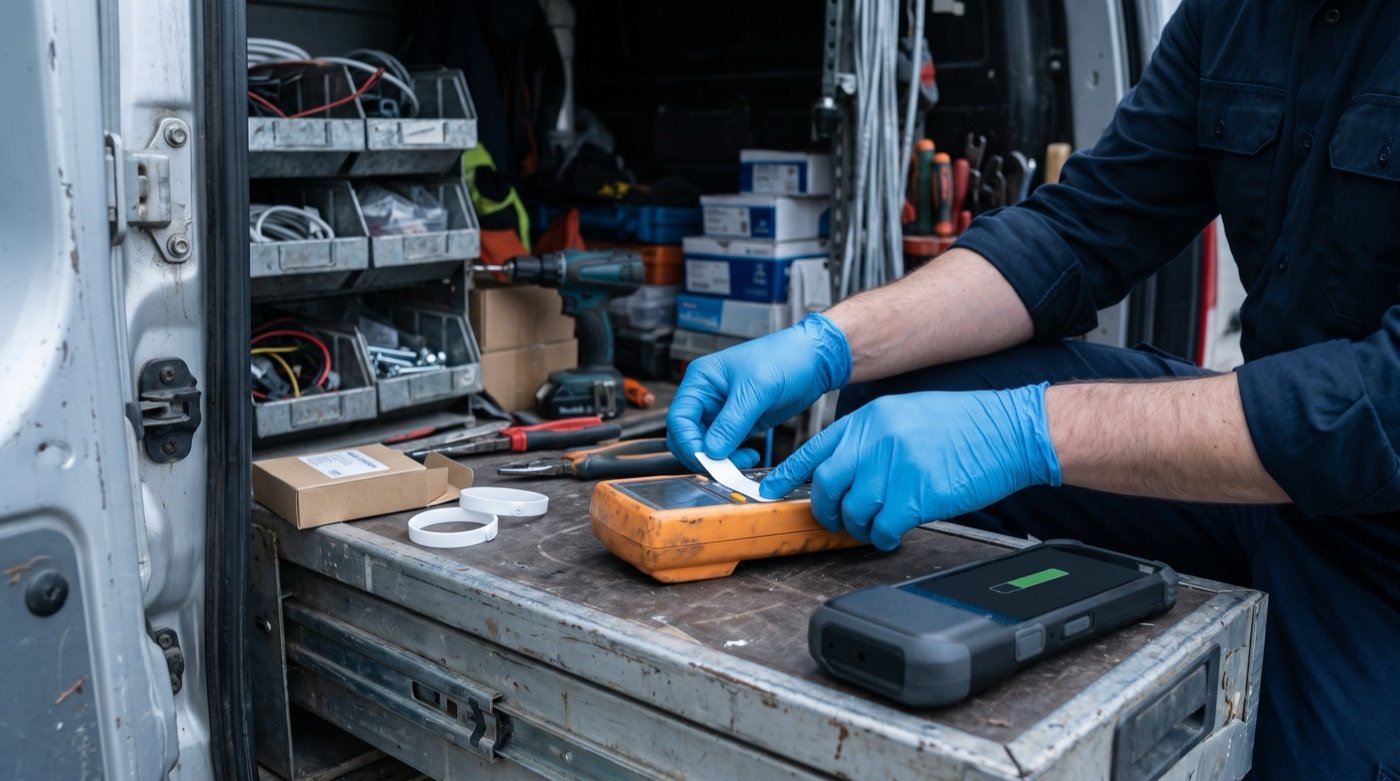
Tag
Stick a tag on anything — the drill, the case, the cable. Cents each, no battery, nothing to recharge, and it outlasts the thing it is on. The handheld writes it in one press.
-

Track
Walk through once. The handheld reads hundreds of tags in one pass — the shelf, the tote, the back of the van — and the website shows what was seen, where, and when.
-

Find
Pick one thing. The handheld says warmer or colder as you move, until it is in your hand.
Who it is for
-
AV, events and production rental
Count the load-out before the truck leaves and the load-in when it comes back. Find the one road case in a stack of forty without lifting a lid. No sub-rental for a cable that was on the shelf all along.
-
Trades with a lot of tools
Count the van stock in one pass at the end of the day. When the core drill is not in the tool crib, see which jobsite saw it last. Tags are cents, so the ladders and the cases get one too.
-
Labs, departments and small research firms
Walk the rooms and come away with what was found, in which room, on which day: the two-year count of grant-bought equipment, done by walking. The department administrator reads it all on the website.
What no one else has
We looked at seventeen different tracking systems. Not one of them could actually walk you to a single item.
The free apps from the big tool brands can only hunt for their own proprietary tools once you're within about a hundred feet. They search one item at a time, and they can't inventory a toolbox. Ours finds anything you've tagged, and instantly counts everything around you on the way.
The systems built for contractors run on beacons and barcodes. A beacon costs ten to twenty-five dollars and houses a battery that dies within two years; a barcode must be read one at a time with the label facing you. Our tags cost pennies, have no battery, and read by the hundreds through a closed tote.
-
Works with no signal
Basement, steel container, field with no bars. It sends what changed the next time it sees wifi.
-
One handheld, nothing to pair
The reader is inside. No scanner to charge separately, no phone clipped to it.
-
Tags that cost cents and last
No battery to die, nothing to recharge, nothing to replace: a tag lasts as long as the thing it is on. Paper ones for the shelf, tough ones for steel and outdoors.
Set up in an afternoon. By you.
- Sign the handheld in with a code.
- Name your places: the shop, the van, each room.
- Tag your first fifty things.
- Walk through once. Watch the count come in.
- Pick one thing and let the handheld lead you to it.
No setup fee, no training course, no team to hire. The big systems' own reference customers ended up hiring somebody to run them. This was built so that nobody has to be.
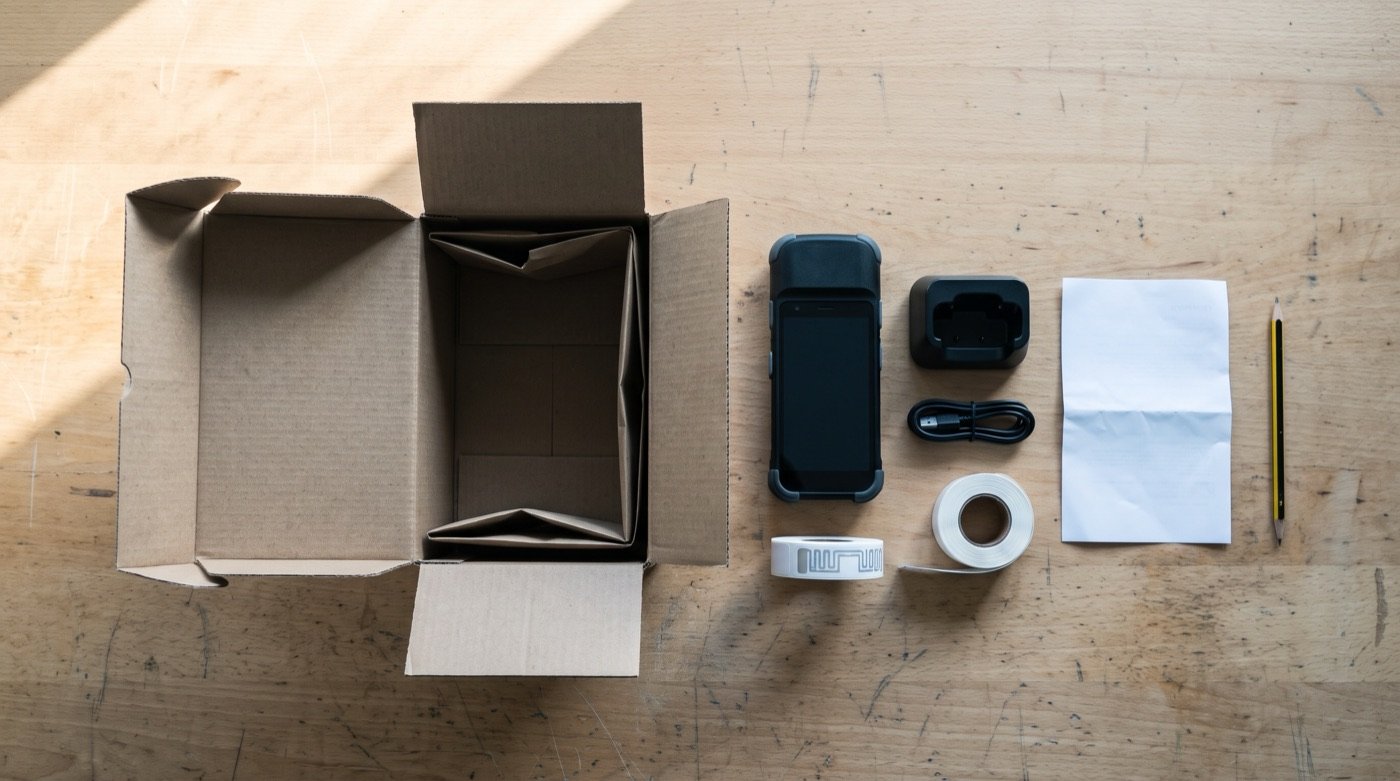
What it costs
No setup fee, no training course, nothing you must buy before it works, and no extra for working with no signal. Ask for an account and the price comes back in the reply.
Not in it yet
Signing a tool out to a person, and printed reports. Both are next — say so if one of them is the thing you need first.
Ask for an account
We set up every account ourselves, so the handheld, the tags and the website arrive working. Tell us what you have to tag and roughly how much; a person writes back.